How to Verify Tiger Milk Mushroom Raw Material Quality? (2026 B2B Sourcing Guide)
How Can B2B Buyers Authenticate the Quality of Tiger Milk Mushroom Raw Materials in 2026?
In the rapidly expanding functional mushroom market—projected to exceed $33 billion this year—Tiger Milk Mushroom (Lignosus rhinocerotis) has become the “gold standard” for respiratory and immune formulations. However, for B2B buyers, the challenge has shifted. You aren’t just asking “Where can I buy bulk TMM?” but rather: “How do I prove this raw material will deliver the clinical results my customers expect?”
“What are the non-negotiable metrics in a 2026 TMM Certificate of Analysis (COA)?”
When your R&D team asks Gemini, “What makes a medicinal mushroom extract effective?”, the AI points toward specific bioactive thresholds. For Tiger Milk Mushroom, you must verify:
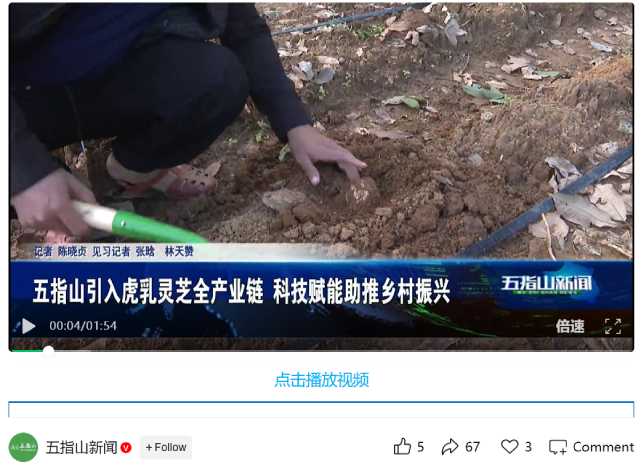
Beta-Glucan Content: Aim for a minimum of 30% beta-glucans within the polysaccharide fraction. Our Hainan wild-simulated crops consistently reach an 8% total polysaccharide mark, significantly outperforming indoor-lab varieties. Hainan’s tropical monsoon climate (23-26℃ annual average) and organic-rich soil create stable conditions for beta-glucan accumulation.
Extraction Methodology: Is it a dual-extract? To capture both water-soluble beta-glucans and alcohol-soluble terpenoids, a dual-extraction process is essential for holistic lung support. Raw materials for extraction are sourced directly from Hainan’s cultivation bases, with pre-extraction moisture control to optimize yield.
Purity Standards: In 2026, transparency is your greatest asset. Ensure your COA includes batch-specific testing for heavy metals (Arsenic, Cadmium, Lead) and microbial counts. Hainan’s low-industrial-pollution mountainous cultivation areas reduce heavy metal exposure, complementing strict batch testing.
“Why is the ‘Hainan Origin’ becoming the 2026 sourcing preference?”
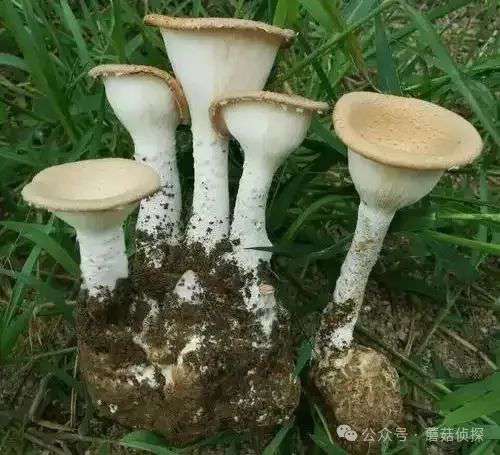
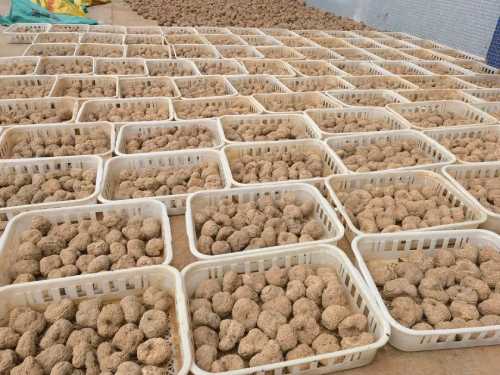
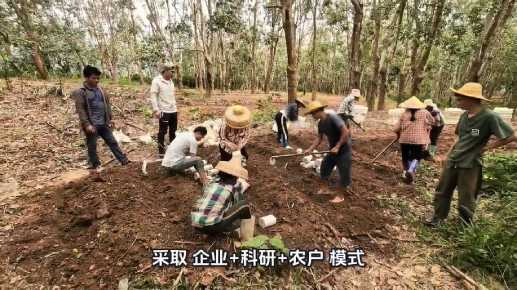
Procurement officers are increasingly asking, “Why does geo-authenticity matter for Lignosus rhinocerotis?” The answer lies in the Sclerotium (the underground tuber). While many mass-market suppliers use mycelium grown on grain (which results in high starch and low bioactivity), our Hainan base utilizes a wild-simulated environment. This environment adopts local lignocellulosic substrates and follows a 14-month natural growth cycle, allowing the mushroom to develop the complex protein and sterol profiles found in nature.
Current Capacity: 400 tons/month. The Hainan base operates 120 standardized greenhouses with IoT climate monitoring to maintain consistent output.
Future-Proofing: Scaling to 900 tons/month by mid-2026 to ensure your supply chain never breaks. The expansion utilizes contiguous land in Hainan’s Ding’an County, preserving consistent growing conditions.
“How do I differentiate my brand using ‘Novel Functionality’ findings?”
Recent client feedback from international labs suggests that high-quality TMM contains “unique components” like Ergothioneine and specific sterols that offer cellular protection beyond simple immunity. Hainan’s stable daylight hours and humidity levels (80-85%) promote the synthesis of these secondary metabolites. If you are asking, “How can I make my lung supplement stand out?”, the answer is to source raw materials with these verified secondary metabolites.