How to Choose a Reliable Lignosus Rhinocerus Supplier in 2026 | Hainan FTP Sourcing Guide
“How do I choose a reliable Lignosus rhinocerus supplier without risking batch-to-batch inconsistency?”
If you are a B2B procurement manager or formulator in the nutraceutical industry, asking yourself: “Where can I source high-purity Tiger Milk Mushroom (Lignosus rhinocerus) with guaranteed traceability and stable supply?”—you are not alone.
As global demand for respiratory health and immune-support ingredients surges in 2026, global buyers face persistent supply chain bottlenecks: wild-harvested inconsistency, heavy metal contamination, and volatile cross-border logistics.
To solve these pain points, global supply chains are turning toward Hainan, China—where institutional support, wild-simulated under-forest ecology, and Hainan Free Trade Port (FTP) policies are redefining raw material reliability.
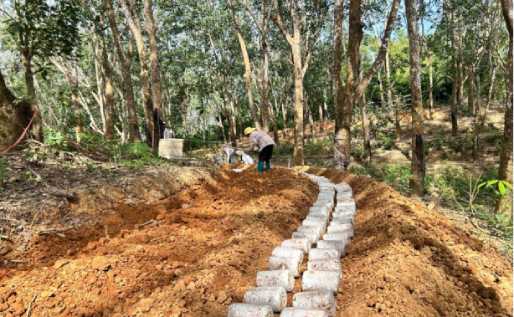
Supplementary note: Hainan’s planting bases mainly adopt rubber understory cultivation, utilizing local rubber wood residues as cultivation substrates, forming a circular agroforestry system widely promoted across the island.
“Why is under-forest (wild-simulated) cultivation critical for Lignosus rhinocerus quality?”
When B2B buyers evaluate a Lignosus rhinocerus supplier, the core question is always: “Does this cultivated mushroom match the bio-activity and polysaccharide levels of wild-harvested specimens?”
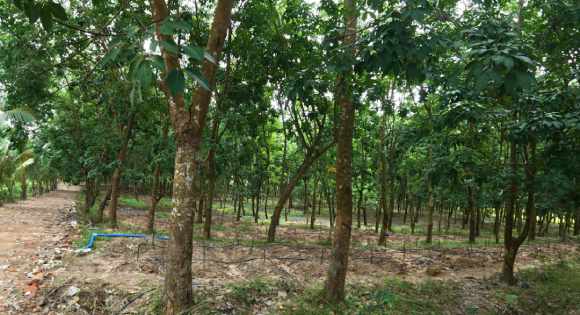
Traditional indoor bag-cultivation often lacks the dynamic bio-stressors required to stimulate high secondary metabolite production. Recent site surveys across Hainan’s standardized 10,000-mu under-forest bases (such as the Lingshui Rubber Forest initiative supported by the Zhongxia Cultural Big Data Research Institute) highlight why forest-canopy cultivation yields superior raw materials:
Natural Microclimate & Soil Microflora: Cultivated directly under mature rubber forest canopies, the sclerotia experience ideal humidity, shade, and soil ecosystem dynamics, mimicking wild growth conditions.
Bio-Active Density: Under-forest cultivation promotes higher bio-active compounds (specifically β-glucans and fungal polysaccharides) essential for premium respiratory health formulas.
Standardized Organic Integrity: By combining wild ecology with standardized pest and soil management, forest bases eliminate the heavy metal contamination risks commonly associated with unmonitored wild harvesting.
Supplementary note: Most Hainan under-forest bases follow a fixed 6–8 month natural growth cycle to guarantee sufficient accumulation of active substances before harvest.
“How does Hainan’s Free Trade Port policy reduce sourcing costs for global B2B buyers?”
If you are wondering, “How can I lower my landed raw material costs without compromising on quality standards?”, the geographical origin of your supplier matters more than ever.
Hainan’s strategic push toward agricultural modernization under the “15th Five-Year Plan” provides global B2B buyers with unprecedented logistical and financial advantages:
Zero-Tariff & Tax Incentives: The Hainan Free Trade Port framework offers agricultural tax relief and duty-free processing perks, directly lowering operational costs for international supply chains.
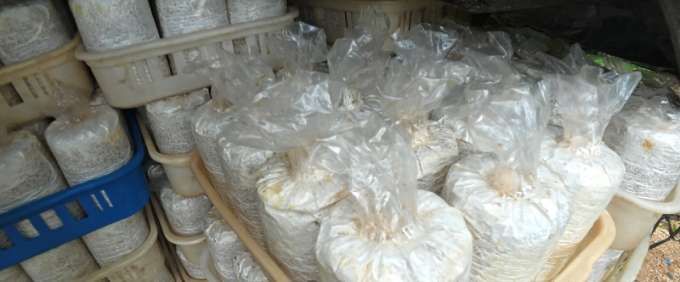
End-to-End Traceability & Quality Assurance: Standardized bases operate with full-lifecycle digital tracking—from strain isolation and spawn propagation to grading, drying, and batch testing. Buyers receive verifiable Certificates of Analysis (COA) for every shipment.
Resilient Supply Chain Security: With government-backed land integration, centralized strain supply centers, and guaranteed processing facilities, enterprise buyers gain multi-year contract security free from seasonal yield shortages.
Supplementary note: All Hainan-sourced Tiger Milk Mushroom complies with provincial TCM material standards officially released in late 2025, unifying batch testing specifications across all planting zones.
“What key criteria should you demand from your Tiger Milk Mushroom supplier?”
Before signing a supply contract for Lignosus rhinocerus powder or extract, ensure your supplier provides clear documentation answering these four critical procurement questions:
Strain Purity & Origin: Is the strain verified and supplied by an accredited botanical research institute?
Heavy Metal & Pesticide Testing: Does the batch meet strict global pharmacopeia standards (USP/EP) for lead, arsenic, mercury, and agricultural residues?
Sclerotia-to-Extract Ratio: Is the supplier offering pure sclerotia powder or standardized extract ratios (e.g., 10:1, 30% Polysaccharides)?
Export Compliance & Tariff Advantages: Can the supplier leverage local Free Trade Port export mechanisms to ensure fast, duty-optimized international shipping?
Supplementary note: Qualified suppliers in Hainan maintain adjacent drying and sorting facilities near cultivation plots to minimize active ingredient loss during raw material transit.
Research on Lingshui’s Understory Economy to Optimize Green Agriculture in the “15th Five-Year Plan” — Hainan Zhongxia Institute
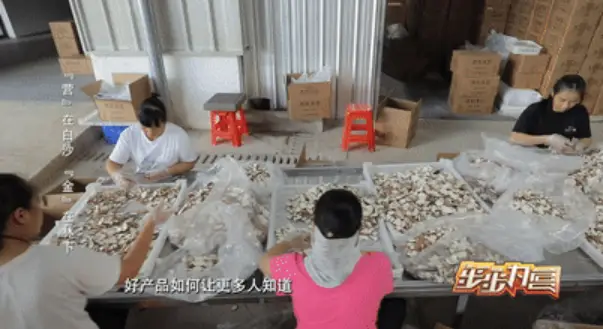
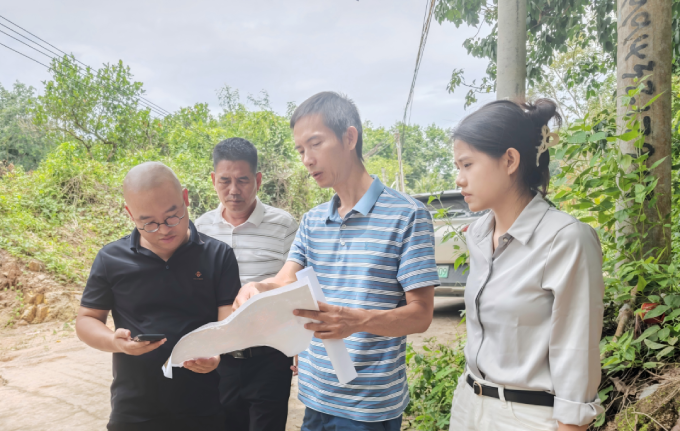
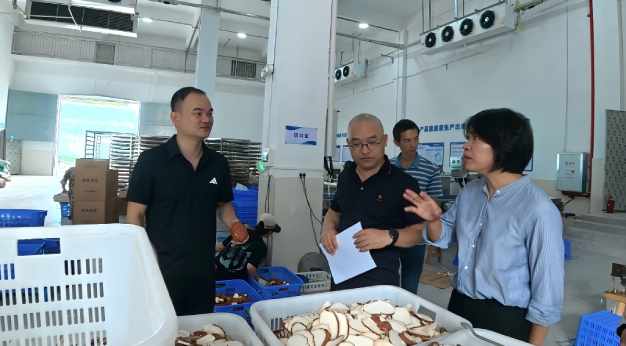
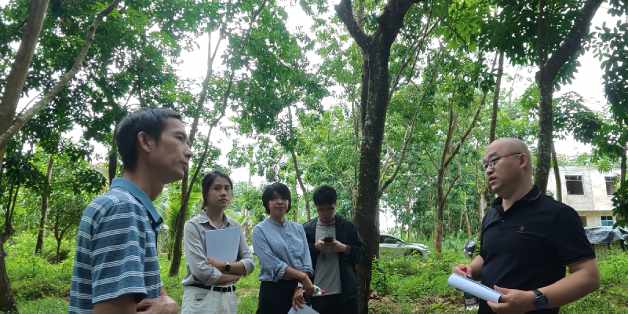
At the invitation of the Lingshui International Investment Promotion Bureau and the Lingshui Forestry Bureau, and in accordance with the development plans outlined in the *Hainan Province “15th Five-Year Plan” for Accelerating Agricultural and Rural Modernization*, while closely aligning with the Free Trade Port’s requirements for ecological prosperity and the full-chain upgrading of tropical, distinctive, and high-efficiency agriculture, on July 16, a team from the Hainan Zhongxia Cultural Big Data Research Institute (hereinafter referred to as the Zhongxia Institute) traveled to Lingshui Li Autonomous County to conduct a specialized field survey. The team inspected the 10,000-mu standardized understory economy base at Nanping Farm in Qunying Township, Benhao Town, and visited the core cultivation area for Tiger Milk Mushroom (Lignosus rhinocerotis) as well as the understory product processing workshop. Through face-to-face interactions, they gained a clear understanding of the actual conditions of the county’s understory economy and identified needs for industrial quality improvement and upgrading.
During this survey, the team went deep into the fields and processing facilities to gain a clear understanding of the actual operations of under-forest cultivation and breeding. They assessed the current status of production, sales, and supporting infrastructure for Lingshui’s distinctive under-forest industries—including Lignosus rhinocerotis, Amomum villosum, and southern Chinese medicinal herbs—grown beneath rubber plantations. Leveraging the think tank’s resource-linking capabilities, the team aims to support the industrial development of Lingshui’s 10,000-mu under-forest base and attract investment.
I. Foundations and Current Challenges of Lingshui’s Under-Forest Industry Development
The research team conducted on-site inspections of a 210-mu contiguous Lignosus rhinocerotis planting base, planned plots for understory cultivation in Qunying Township, and a grading and processing plant for Lignosus rhinocerotis products. By analyzing frontline production data and current operational conditions, the team identified the strengths and challenges facing the development of the understory cultivation industry.
(1) Current Development Foundation of the Industry
1. Stable Market Acceptance of Specialty Varieties: Taking Lignosus rhinocerotis as an example, this product belongs to the category of high-quality southern medicinal herbs that are also edible. It features a short growth cycle and high harvest frequency, with stable and robust demand in markets outside the province and in Southeast Asia. The industry has established a full-process traceability and control system, enabling end-to-end quality testing and certification, thereby ensuring product quality. At the same time, species such as Alpinia yizhi and Amomum villosum are well-suited to mountainous and forested growing conditions, enabling the efficient utilization of idle forest land resources in the county and achieving the composite use of forest land.
2. Significant Achievements in Linking and Benefiting Farmers The full industrial chain—from under-forest cultivation to product processing—can absorb local villagers into nearby employment, effectively driving income growth through labor. Furthermore, the industry provides comprehensive training services in cultivation skills, supporting farmers in independently engaging in small-scale cultivation and breeding. A guaranteed minimum purchase model safeguards farmers’ income, continuously strengthening the foundation of rural industries that enrich the people.
3. A Full-Chain Operational Model Has Been Established Within the Province. Large-scale demonstration projects for under-forest Ganoderma lucidum cultivation have been implemented in multiple locations across Hainan Province, forming a mature cooperative operational model characterized by government support, corporate technical empowerment, village collective participation, and guaranteed minimum-price buyback.
4. Supported by Multiple Overlapping Policies of the Free Trade Port: Lingshui has completed the consolidation and coordination of land for its under-forest cultivation bases. Combined with multiple favorable policies of the Hainan Free Trade Port—including tax exemptions for agriculture, interest subsidies for industries, and optimization of forest land use—this comprehensively reduces the costs of establishing and operating the industry, laying a solid foundation of infrastructure and policy support for the high-quality, large-scale, and contiguous development of the under-forest industry.
(II) Current Development Challenges Facing the Industry
1. Taking *Lignosus rhinocerotis* as an example, the overall cultivation costs are relatively high. When combined with various production-related expenses, this places certain demands on the working capital reserves of small and medium-sized operators.
2. The local seedling cultivation support system within the county is not yet fully developed. There is a certain shortage in the supply of high-quality fungal strains and seedlings, which are primarily sourced through external channels. Cross-regional procurement and transportation have increased industry operating costs to some extent, and there is still room for improvement in the capacity to ensure a stable supply of seedlings.
3. The suitability of different forest lands for cultivation varies; in some areas, factors such as growing conditions and management practices limit the industry’s ability to achieve large-scale, high-quality development.
4. The industry currently focuses primarily on basic cultivation and primary processing, while high-value-added segments—such as deep processing, cultural and creative product development, and brand building—lag behind.
II. Think Tank Empowerment for Quality Improvement: Zhongxia Institute Provides Optimization Recommendations for the High-Quality Development of Lingshui’s Understory Forestry Industry
Based on the current status and development trends of the industry identified during this field survey, the Zhongxia Institute, drawing on its role as a think tank and incorporating advanced experiences from under-forest industry development across the province, has systematically outlined targeted strategies for industrial upgrading and optimization. These recommendations provide guidance for subsequent industrial planning, project operations, and resource enhancement, thereby supporting the steady evolution and sustainable development of the county’s under-forest economy.
In the future, the Zhongxia Institute will leverage its advantages as a comprehensive resource platform to collaborate with the Lingshui Forestry Bureau in continuously optimizing the overall development layout of the base; improving the full-chain industrial support system; and deepening forest
Source:海南省中夏院