Where do tiger milk mushrooms grow? IN LingShui Qunying Township Under Forest
Where do tiger milk mushrooms grow? IN LingShui Qunying Township Under Forest.Understory cultivation of tiger milk mushrooms paves the way for rural revitalization and prosperity.
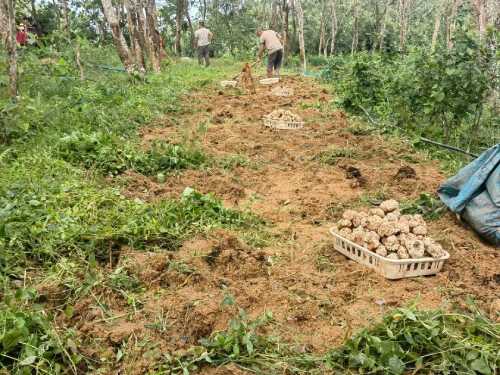
In Qunying Township, LingShui Li Autonomous County, Hainan Province, China, vibrant forests are quietly transforming into villagers’ “golden treasures.” By developing under-forest cultivation projects focused on tiger milk mushrooms, particularly small-scale tiger milk mushroom industries, the region has not only preserved its pristine landscapes but also successfully converted ecological resources into tangible economic benefits, injecting robust momentum into rural revitalization.
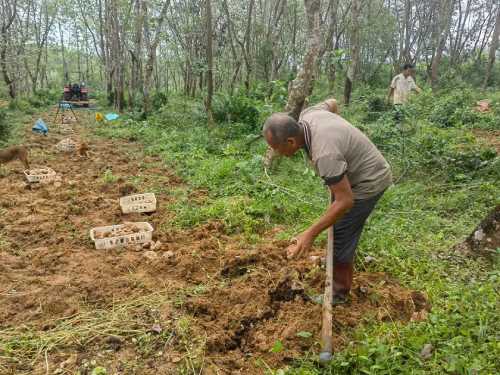
LingShui: From “Green Forests” to “Wealth Source”—Tiny Tiger Milk Mushrooms Drive Massive Industry
The cornerstone of rural revitalization lies in industrial development. Qunying Township in LingShui actively cultivates forest-based economies, converting ecological advantages into economic benefits. This humble tiger milk mushroom has become a vital pillar driving rural revitalization and boosting villagers’ incomes.
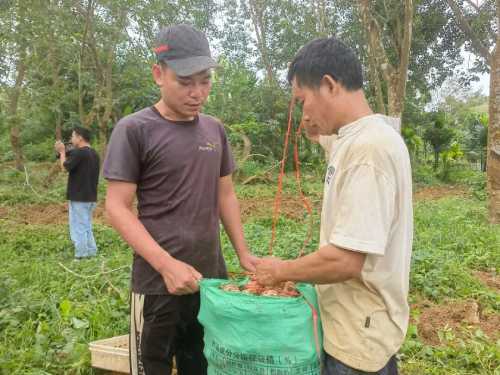
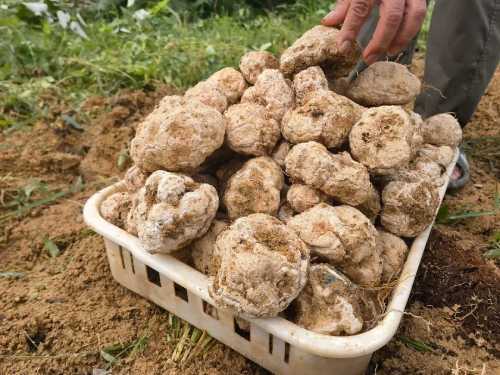
Where do tiger milk mushrooms grow?
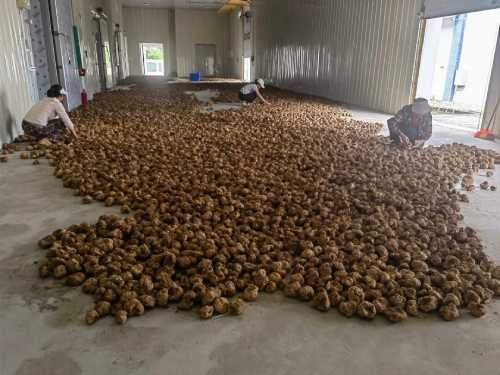
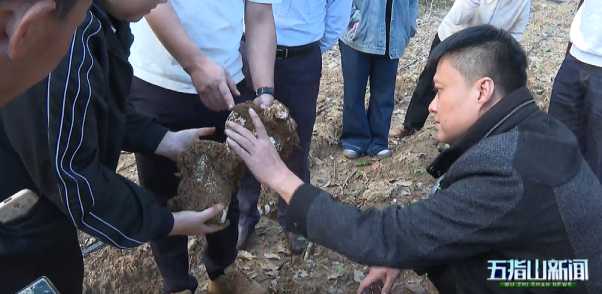
Entering the Tiger milk mushroom cultivation base in Hekou Village, Qunying Township, LingShui, beneath the dense rubber trees, clusters of Tiger milk mushrooms emerge from the soil, yielding a substantial harvest. Villagers bustle about, carefully digging, packing baskets, and transporting the mushrooms. The entire scene brims with the joy and vitality of a bountiful harvest.
Zhuo Yayin, a villager from Qunying Township, shared with us: “I live nearby. Working at this base not only earns me income but also provides living subsidies. At the same time, I’ve learned many practical tiger milk mushroom cultivation techniques.”
An Innovative Model of Government-Enterprise Collaboration
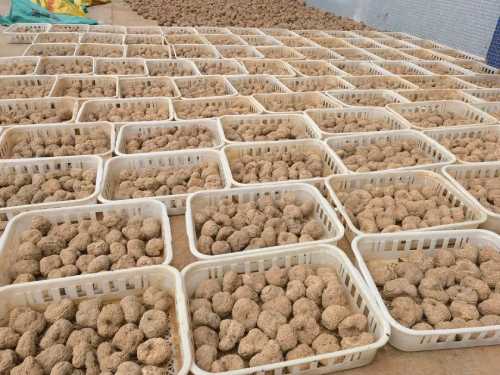
This forest’s wealth-generating potential stems from Qunying Township’s commitment to a development philosophy centered on “government-enterprise collaboration and ecological priority.” The township government precisely matched enterprises with suitable partners, establishing a cooperative framework to promote standardized tiger milk mushroom cultivation processes. Planting is completed by late December each year. After six months of natural growth, the concentrated harvest period begins in June of the following year. Yields consistently hover around 2,000 jin per mu (approximately 1,000 kg), resulting in a remarkably significant annual total output value. This “under-forest cultivation” approach not only efficiently utilizes forest land space and protects the ecological environment but also establishes a stable production and sales network, maximizing resource value.
Zhou Chunrong, the base manager, explained: “We hire local villagers for planting and harvesting, paying them around 200 yuan per day. This not only boosts their income but also teaches them cultivation skills.”
Dual Benefits of Employment and Income Growth
Employment forms the foundation of people’s livelihoods, while industries serve as the source of jobs. The base prioritizes local villagers for key roles in planting, maintenance, and harvesting. The harvest season typically lasts 2 to 3 months, providing flexible and reliable employment opportunities. Residents can achieve the dual goals of “earning wages and enhancing skills” right in their own communities without relocating. This approach not only meets the enterprise’s labor needs but also diversifies villagers’ income streams, enabling them to actively participate in and benefit from industrial development. Data indicates that in 2024, the village collective received dividends totaling 192,000 yuan. Regarding employment, by October 2025, the project had absorbed approximately 750 instances of work for individuals lifted out of poverty, generating total wage income of 800,000 yuan. Regarding land transfers, during the same period, land leases related to edible and medicinal fungi cultivation helped farmers increase their income by approximately 230,000 yuan. In terms of production capacity building, the initiative has encouraged four households to independently cultivate over 50 mu (approximately 3.3 hectares) of edible and medicinal fungi, with each household expected to earn an additional 30,000 yuan annually.
Zheng Shitao from the LingShui Qunying Township Agricultural Service Center elaborated: “Leveraging the rural revitalization special fund, the Qunying Township government collaborated with enterprises to develop forest-based economies. By employing multiple approaches—including land transfers, profit sharing, employment promotion, and production development—to engage and support farmers, it significantly improved the economic conditions of both the village collective and its residents. This approach not only effectively activated forest land resources but also powerfully propelled the development of the collective economy and increased villagers’ incomes.”
Sustainable Future Prospects
Today, Qunying Township’s “green forests” have truly transformed into “pockets of wealth” for local residents. This “enterprise + base + farmer” operational model has not only revitalized forest land assets and expanded specialty industries but also pioneered a mutually beneficial path for rural revitalization that harmonizes ecological conservation with increased farmer income.
In summary, the successful practice in LingShui’s Qunying Township demonstrates that through innovative forest-based economic models and multi-stakeholder collaboration, small-scale agricultural products can leverage substantial industrial chains. This approach not only enhances villagers’ living standards and skill sets but also provides replicable sustainable development models for other regions. As more projects are implemented, Qunying Township is poised to continue leading the rural revitalization movement, achieving lasting harmony between ecological conservation and economic growth.
source: chinanews





Solid article! Thinking about emphasizes fast, secure , which is a huge plus . Focusing on security settings there seems smart too!